
Book Review: "The Pretender"
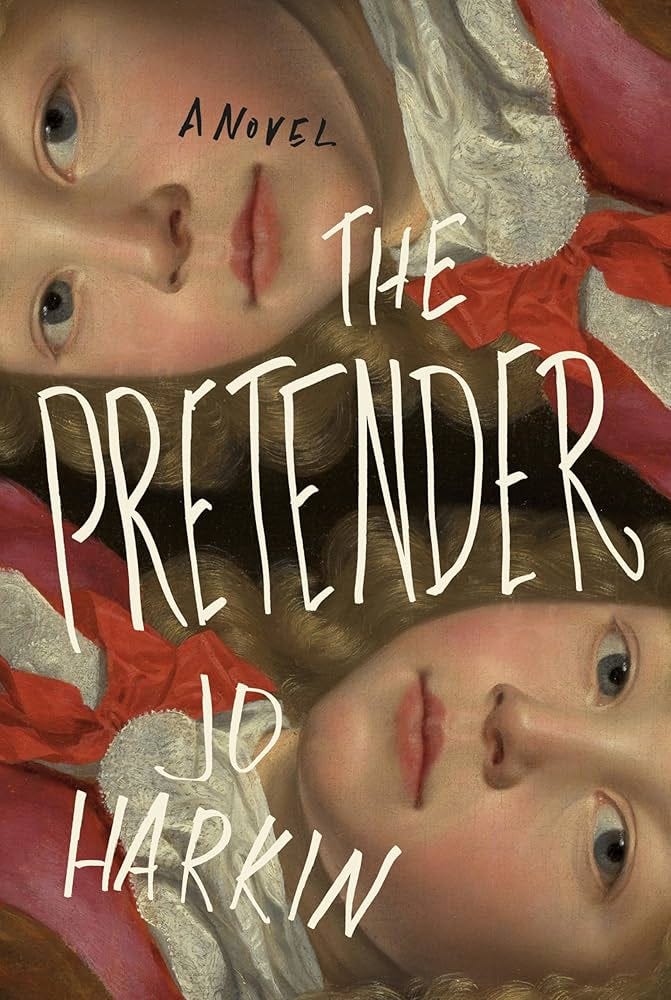
Jo Harkin's new novel is a heartbreakingly beautiful about Lambert Simnel, one of those who tried to overthrow Henry VII and was subsequently consigned to the dustbin of history.

Hello, dear reader! Do you like what you read here at Omnivorous? Do you like reading fun but insightful takes on all things pop culture? Do you like supporting indie writers? If so, then please consider becoming a subscriber and get the newsletter delivered straight to your inbox. There are a number of paid options, but you can also sign up for free! Every little bit helps. Thanks for reading and now, on with the show!
Warning: Full spoilers for the book follow.
When I say that The Pretender is one of the best books–of any genre–that I’ve read this year, you can rest assured that I’m not exaggerating. More accessible than Wolf Hall, a novel to which it’s often compared, it still manages to capture the mix of strangeness and familiarity of the late medieval past. The heart and soul of the book is the man who would become known to history as Lambert Simnel, one of the two most notable Yorkist pretenders that sought to topple Henry VII from his ill-gotten throne and set themselves up in his place.
When the novel begins our hero, John Collan, is, so it seems, a son of a humble farmer near Oxford. Soon enough, however, he’s caught up in a game of thrones that’s not of his own making and that will slowly but surely strip him of his good nature, leaving behind a man determined to get vengeance for those who have ill-used him and those he loves. To history he will become known simply as Lambert Simnel, but during the course of the novel he goes by many names as he passes through different hands on his way to the battle that will see his royal pretensions dashed on the rocks of failure.
The Pretender makes for grim reading at times, precisely because so many of the people in this young man’s life are really only out for the main chance. They don’t really care about John, not even when he is pushed into the position of Edward, Duke of Clarence (the supposed son of George, brother of Edward IV, who allegedly sent his son into hiding, while his fake son was the one eventually imprisoned in the Tower of London). The fact that they are willing to change his name depending on the circumstances says a great deal about how they view him.
There are a few islands of calm amid all the chaos, in particular once young John/Edward goes to Burgundy, where he is taken in and sheltered by Margaret, his “aunt.” Margaret is a fascinatingly enigmatic figure–I’ve always found her so–but it’s really Philip the Handsome who becomes the English pretender’s one true friend. The two boys forge an extraordinary friendship, and one of the most achingly tragic things about the young John/Edward’s life is that all of his friendships are doomed to be ephemeral, whether because he has to leave them behind or because, as is the case with the altruistic John de la Pole.
It’s only after he arrives in Ireland that he gets a bit of stability, and this is largely due to the fact that he falls in love with the young and sharp-tongued Joan, the daughter of Lord Kildare (yet another conspirator). Joan may be spoiled and more than a little malicious, but she seems to harbor some genuine fondness for the pretender in her home, a young man who, after all, is really just a pawn in the games that those with more power and wealth than he does like to play. Their love becomes one of the guiding lights of John/Edward’s life, made all the more poignant because it is clearly doomed. It’s a relationship that will haunt him for the rest of his life.
Once his rebellion fails and he is taken captive by the surprisingly enduring Henry VII, Edward/John/Lambert begins a sinister downward spiral that sees our hero confronting the cankerous darkness in his own soul. At first he’s nothing more than a spit-turner in Henry’s kitchens but, as he proves surprisingly adept at leading Yorkists into betraying themselves, he becomes a master spy. One light in the darkness is the maid Beatrice, who sees a goodness in him that he can’t see in himself. Harkin ably captures the sense of paranoia and ever-present danger that was a key aspect of the early Tudor court, allowing us to feel with Lambert as he tries to survive in a court where everyone is always scheming against or for the king.
When Lambert discovers that his beloved Joan has died, it marks a further turning point for him. For better or for worse, she gave him something to hope for, a future in which he wasn’t just a pawn in other people’s games, a spy bringing misery and death to those foolish enough to trust him, or just another appendage to a usurper’s sprawling household. Learning that she perished seems to take something out of him and, though he manages to secure his freedom and forge a little home for himself, Beatrice, and her lover but, though he attains revenge, he remains a wanderer at heart. (Speaking of which: I love the little queer family they manage to establish, before John/Edward/Lambert decides to go wandering).
This is the kind of novel that breaks your heart and puts it back together, over and over again. Lambert is, as his friend Beatrice reminds him, an essentially good man, which is precisely what makes his slow decline into hatred and anger all the more wrenching. Since we alone have been with him from the beginning, we know just how apt her description is. We know better than anyone else that it didn’t have to be this way, that he could have been something different, could even have led a rather quaint and uneventful life as a farmer. Had destiny and history and those seeking their own power not intervened, he could have even been happy.
Much of the novel’s narrative energy stems from its grappling with the central enigma of its central character. While at first he has a strong sense of identity, this is slowly stripped away as those who take custody of him force him to adopt new names as he draws closer to power. This poses the question: Who are you, when everyone around you is always trying to manipulate you for their own ends? No one seems interested in really giving him the love and support a boy needs and, in the end, it’s up to him to discover his own sense of self and his own happiness, if indeed such a thing is ever possible after the eventful and tragic life he’s led.
To say that I loved The Pretender is to probably understate the case. It’s not every historical fiction novel that can so powerfully bring the past to life and give us a fascinating character study at the same time, but that’s exactly what Jo Harkin has managed to achieve. This is the kind of book that really does stay with you long after you’ve finished it. If, as the saying goes, history is written by the victors, it’s high time that those who were left behind in the annals get the chance to tell at least some variant of their own story. Lambert Simnel is someone who has long been regarded as nothing more than an appendage to the larger Tudor story, the innocent peasant boy who got caught up in matters beyond his understanding. Harkin has rescued Simnel from the dustbin of history and given him a tale that’s as beautiful, and as tragic, as anything in the Tudor era.