
Book Review: "Talking Classics: The Shock of the Old"
Renowned classicist Mary Beard makes a well-reasoned, humorous, and insightful argument for why the study of the ancient world matters now more than ever.

Hello, dear reader! Do you like what you read here at Omnivorous? Do you like reading fun but insightful takes on all things pop culture? Do you like supporting indie writers? If so, then please consider becoming a subscriber and get the newsletter delivered straight to your inbox. There are a number of paid options, but you can also sign up for free! Every little bit helps. Thanks for reading and now, on with the show!
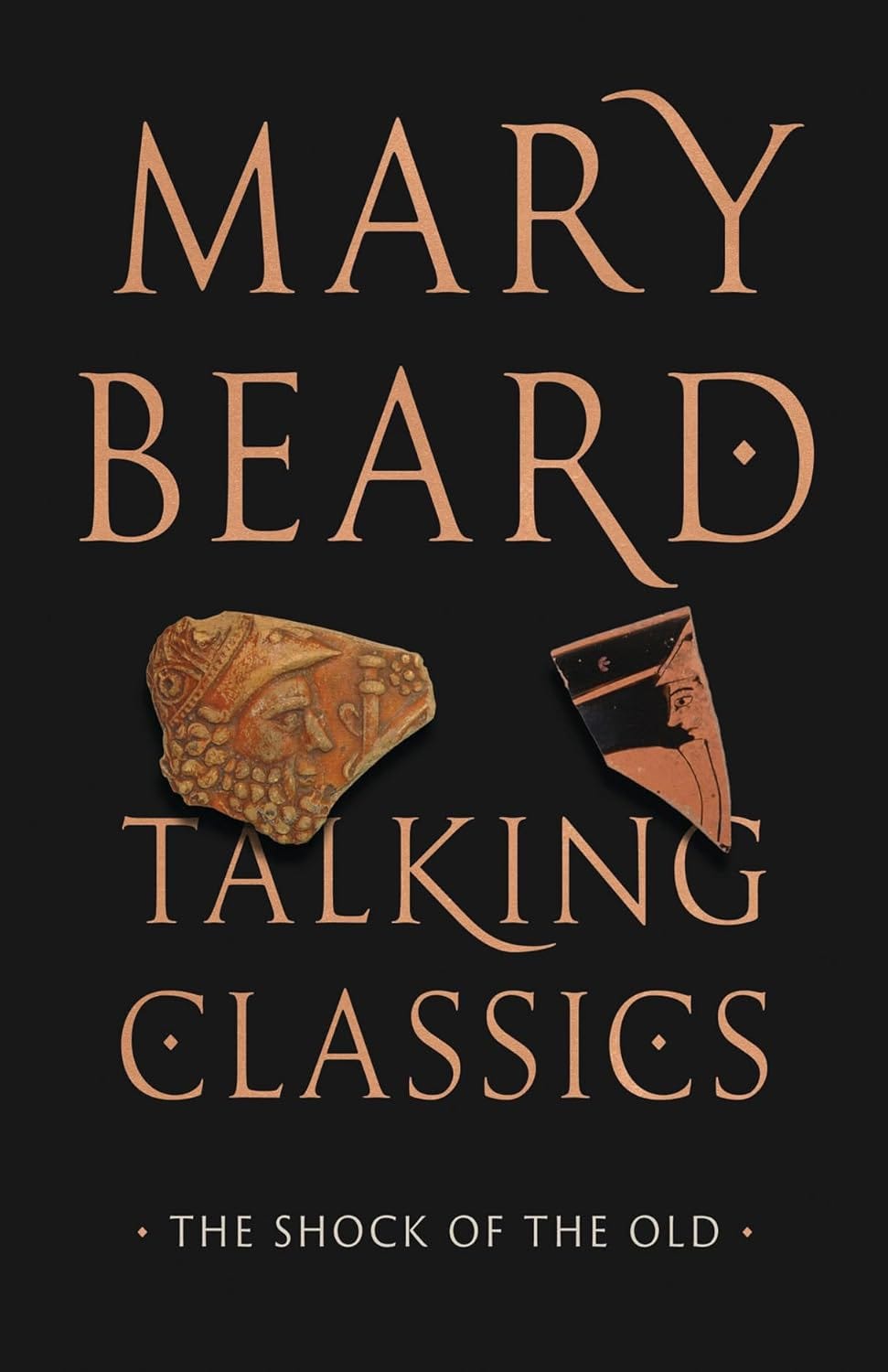
I’ve long been a fan of the works of Mary Beard. When it comes to making the ancient world both accessible and explicable to the modern reader, no one does it quite like Beard, and her new book, Talking Classics: The Shock of the Old, is no exception. Drawing on a series of lectures, it’s a slender volume but one that packs a punch. If you aren’t already convinced of the value of an education in the works and culture and languages of the ancient world, this might just be the book to convince you.
Central to Beard’s argument is the Greek concept of thauma, which can be loosely translated as “wonder.” One of the central anecdotes in the book tells of Beard’s early childhood encounter with a piece of ancient bread in the British Museum, an encounter with the materiality of the past that galvanized her and led to a lifetime’s worth of engagement with the people and texts of the ancient world. Thanks to Beard’s lively and spirited voice, her rigorous argumentation and keen command of both the history of her discipline and its remarkable and messy present, she manages to convey to those of us reading her book just why antiquity remains such a fascinating and relevant field of study.
It’s probably no secret that, like Beard, I have long had a fascination with the ancient world, particularly the Greeks and Romans. It’s hard to say exactly where this fascination started or what gave birth to it, but by the time I was a teenager I was obsessed with all things ancient. When I got to college, I soon added Classics to my roster of majors–joining, appropriately enough, English and History–and I’ve really been obsessed with the ancient world ever since. I even wrote an entire dissertation about the representation of the ancient world in the epic films of classic Hollywood.
All of this is to say that I’m very much already convinced of the need for studying the classics, but I still appreciate the passion, wisdom, and erudition that Beard brings to the subject. She convincingly argues that the ancient world is both very like and unlike our own. To be sure, in the ruins of Pompeii one can find graffiti that read very similar to those you might find in a bar in our own time; at the same time, as Beard is at pains to point out, the social world the Romans inhabited was one that was very different from our own. For one thing, it was rare that anyone in the ancient world would’ve even had a firm conception of what they looked like, since mirrors weren’t really in use. It’s a simple observation but, when you sit with it for a while it really changes how you think both about the ancients and the moderns. Beard’s book is filled with marvelous little observations like this one, seemingly commonsense remarks that are potently profound when you sit with them for a while.
As a result of just how strange and removed the ancient world is, Beard argues, it often makes for a great place to think through some of the questions and issues that continue to excite and challenge us. At the same time, Beard makes clear that the ancients don’t necessarily have all of the answers or, really, any definitive answers at all. Instead, what they provide is a general framework for interrogating the world around us. What’s more, rather than proposing that ancient Greece and Rome represent some sort of apex of human attainment, she instead shows how the classics–whether in literature, history, or sculpture–resist and challenge our attempts to fit them into such narrow-minded and constricting understandings.
While much of Beard’s book focuses on the reasons we should still care about and learn about the ancient world–including but certainly not limited to the languages of Greek and Latin–she also gives us valuable insight into the history of the discipline. As she rightly points out, the study of the classics, particularly when the field was heavily dominated by an emphasis on languages over things like culture and history, was a means of implementing and enforcing social and political exclusion. This is hardly surprising since, as Beard further argues, the ancient world has often been bound up with all sorts of noxious and toxic politics from fascism to the alt-right. The classics have been and remain a battleground of ideas, a further indication of just why they remain so important and worthy of study and examination.
In the end, though, Beard’s argument for why the classics still matter is simple but profound. As she puts it, quoting one of her colleagues, they teach you to read difficult things. To me, it’s impossible to overstate the value of such a skill. After all, we live in a world in which far too many people gravitate toward the simplistic, where deep fakes and AI constantly challenge the very perception of lived reality, where everyone retreats into their own information and conceptual silo and chooses to stay there rather than engaging with those things that might challenge them or force them to reconsider their worldview.
Unless you’ve been living under a rock for the past couple of decades, you’re no doubt aware of the extent to which Classics–like many other humanities disciplines–has been under sustained and unrelenting assault from budget cuts and just a general antagonism toward anything that isn’t a STEM field. Beard’s work, along with the enormous popularity of Christopher Nolan’s The Odyssey, gives us plenty of reason to think that the study of antiquity, in all of its glorious and sometimes frustrating complexity, will continue to be a source of wonder, of thauma, for all of us.